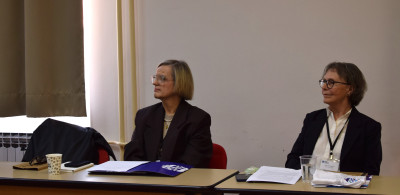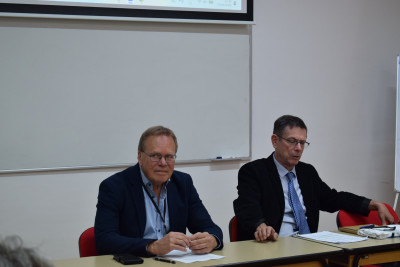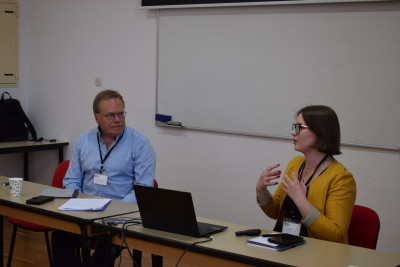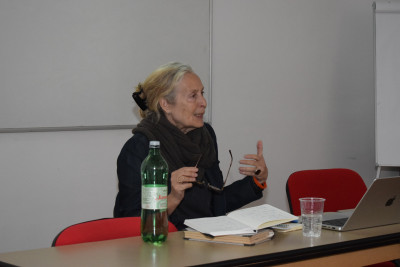

Summary of the discussions from the IUC Workshop Academic Freedom in Context: Trends in Threats and Coping Practices.
by Prof. Gunn Elisabeth Birkelund, Chair of the IUC EC
Academic Freedom is Globally Under Pressure
IUC is grounded on academic freedom
Since its start in 1972, the Inter-University Centre in Dubrovnik has been strongly devoted to academic freedom as a necessary condition for science and scientific collaboration. As a meeting place for academics, students, and other interested in research and society the IUC Dubrovnik emphasizes academic freedom, critical thinking and open discussions. IUC aims at promoting and protecting these values in all its activities.
Academic freedom is a fundamental right for scholars to research, teach, and publish.
The workshop emphasized the following:
GENERAL
- Academic Freedom is globally under pressure in three ways: external pressure, internal pressure, and normalization of these pressures, implying that the sector gradually adapts to new and more limited barriers.
- Academic freedom is often associated with democracy. Academic freedom is both a precondition, as well as a consequence of the democratic society.
- But scientific outcomes can also be strong in non-democratic societies, where research resources are channelled to specific areas decided by the political authorities. Thus, academic freedom is important, but not a necessary condition for some scientific outcomes.
- Academic boycott of research collaboration with researchers in another country may amount to a violation of individual academic freedom. Academic boycott is politically motivated, against a political regime, not against individual researchers. With one possible exception (boycott against the apartheid regime in South-Africa) there is no evidence that academic boycott has had more positive than negative consequences. Economic boycott, however, has had effects.
- In several countries academic freedom is violated daily.
- Academic freedom is challenged by digital threats and disinformation.
- We need to find ways to resist threats to academic freedom.
- Universities should always encourage open and free dialogue. This is particularly important today, where the freedom of speech is threatened in many societies.
RESEARCH
- Academic freedom can be justified at both the individual and the societal level. At the individual level, academic freedom is a human right, drawing on ethics, such as human dignity, social values and norms of conduct. At the individual level, academic freedom is in many countries grounded in the law. Academic freedom also has an instrumental aspect, to provide valid research output for the society. Academic freedom at the institutional level might differ from academic freedom at the individual level.
- Academic freedom comes with responsibilities. For researchers this means freedom to follow your research ideas coupled with methodological restrictions, i.e., applying updated scientific methodology.
- Internal threats to academic freedom are found in many contexts. Self-censorship implies that researchers might avoid certain research topics.
TEACHING
- For students, academic freedom includes the freedom to learn from teachers who are freely expressing their views in accordance with professional standards.
- Violations of academic freedom are often subtle, in such a way that it is not clear what teachers and students can and cannot say.
- In some contexts, teaching materials and what teachers say in class can be monitored by outside actors, with possible repercussions of any complaints against the teachers from the students, their parents or others.
- Academic teaching requires openness, critical thinking and mutual trust. All is lost when restrictions are applied. It is important that admission criteria to higher education are fair and equitable. Recognizing the freedom to learn in law would strengthen students’ rights and guarantee their role in higher-education governance.
PUBLISH
- Open Science is important for maintaining people’s trust in science. Openness should include the whole research process, data, methodology, etc., so that others can check if the theorizing, analyses, interpretation, and outcomes are reliable.
- Academic publications should be available for all, independent of their financial resources.
---------------------------------------------------------
In the discussion we also addressed the following:
- Can we have freedom as a pure value or is freedom also political?
- Important to distinguish academic freedom and freedom of speach. The contribution of the scientific methodology differentiates science from laymen’s contributions.
- Financial funding is often a barrier to academic freedom. It is important to have institutional autonomy, i.e., at the university level. Research funding given by state and/or private funds should accept the autonomy and independence of the universities.
- What are universities for? A playground for the mind.
- It is an open question if academic freedom should also include awareness of the impact of research?
- Academic freedom is an individual right; like Human Rights, which also has an eye for social, economic and political inequalities.
- How do we argue in favour of academic freedom in a political climate that is politically polarized?
- Strategies to deal with threats to academic freedom: appeal to the broader academic community, build effective networks, academic solidarity.
Schedule can be found here.
We have asked some of our speakers to share what they consider important when we are discussing academic freedom.
Prof. Nina Belayeva, Nomad University Georgia
Prof. Astri Andresen, University of Bergen
Ms. Lana Par, European Students’ Union
Prof. Dragica Vujadinović, University of Belgrade
Supported by Dubrovnik-Neretva County.

1.jpg)






1_thumb.jpg)